

For exporters across Europe, Asia, and beyond, if your business isn’t prepared, CBAM could disrupt your access to one of the world’s largest markets. So, what is CBAM, and why does it matter for you? Let’s break it down.
1. What is CBAM?
• The Carbon Border Adjustment Mechanism (CBAM) is a new EU policy designed to ensure fair competition while promoting global decarbonization.
• EU manufacturers already pay for carbon emissions under the EU Emissions Trading System (EU ETS). CBAM ensures that companies outside the EU selling into the EU market also pay for the carbon footprint of their goods.
• Think of it as a “carbon levy” for imported goods.
Key takeaway: CBAM levels the playing field for EU firms while pushing businesses worldwide to adopt cleaner production methods.
2. Why Should Exporters Care?
• Starting 1 January 2026, companies exporting to the EU importers (declarants) will need to pay for the embedded carbon emissions of their goods.
• The transitional reporting period ends 31 December 2025, meaning exporters have just over a year to prepare for mandatory compliance.
• Failure to adapt could mean:
• Higher costs: Carbon-intensive goods will face significant levies.
• Competitive disadvantages: Cleaner producers will gain the upper hand.
• Restricted market access: Non-compliance could lead to blocked shipments.
Urgent Message: Whether you’re in Turkey, ASEAN, China, or any other country exporting to the EU, the time to act is now.
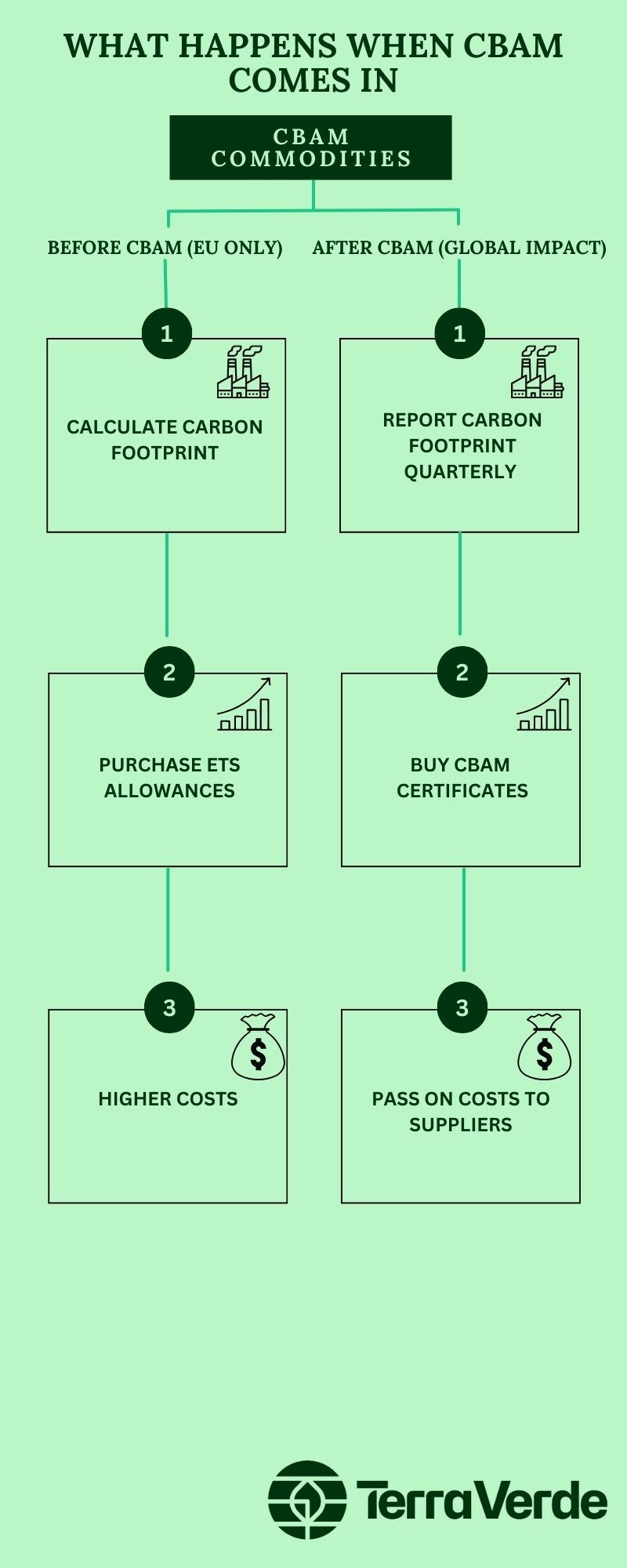
Key Message: The EU is leveling the playing field for its manufacturers by ensuring that non-EU importers also pay for the carbon embedded in their products.
3. Who Does CBAM Impact?
• CBAM affects six key commodities that are both carbon-intensive and globally traded:
1. Steel
2. Cement
3. Fertilizers
4. Aluminium
5. Electricity
6. Hydrogen
Example: Imagine you’re a producer exporting steel tubing used in construction, cars, or even furniture manufacturing to the EU. Starting 2026, you’ll need to calculate the carbon emissions involved in making that tubing and purchase CBAM certificates to cover those emissions.
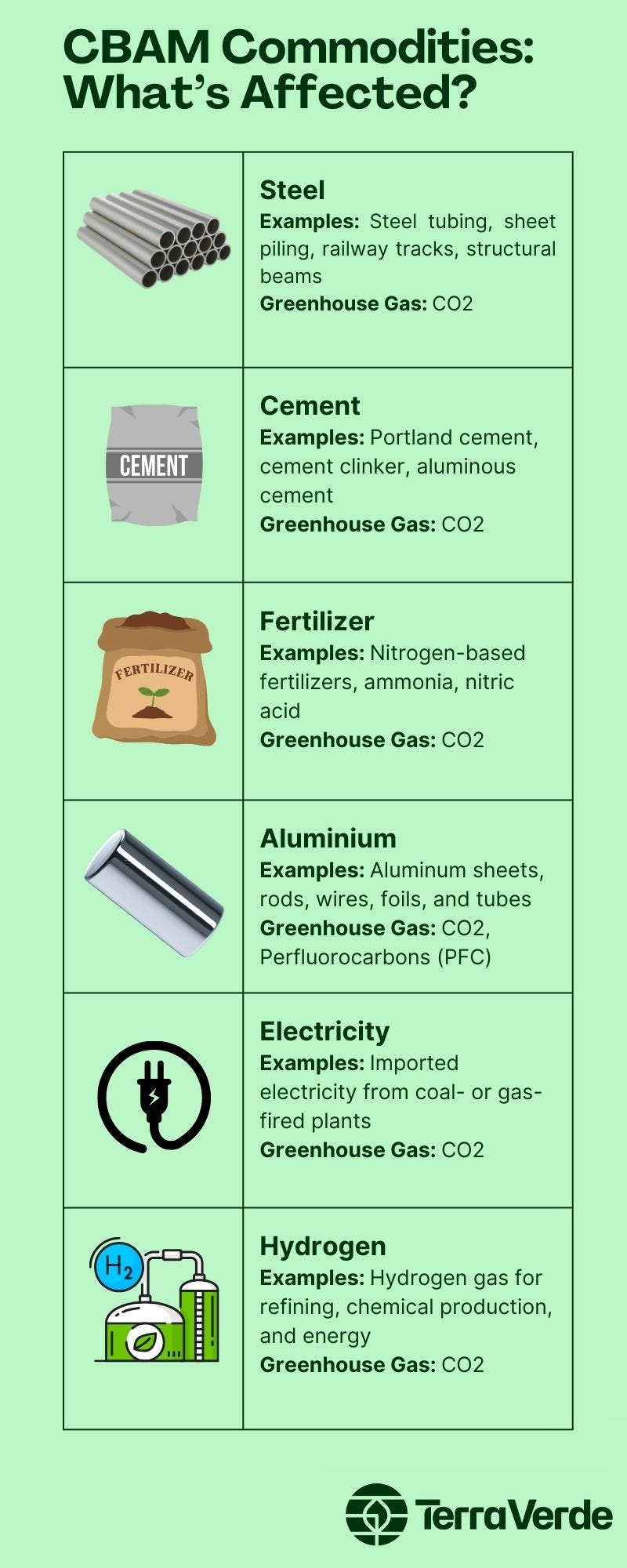
Why This Matters? These commodities are some of the most carbon-intensive and widely traded. Starting in 2026, their embedded emissions will be priced under CBAM, ensuring fair competition and driving decarbonization across global industries.
Conclusion: CBAM is coming, and the EU means business. With the clock ticking toward 2026, preparation is your competitive advantage. Want to know why CBAM exists and how it works? Stay tuned for Part 2 in our series, where we’ll dive deeper.
Subscribe to stay ahead of CBAM updates and learn how to prepare your business for the 2026 changes.
Need help preparing for CBAM? Terra Verde specializes in guiding exporters through the complexities of carbon compliance. Reach out to learn how we can help your business succeed.