

CBAM isn’t just about leveling the playing field; it’s a critical tool in the EU’s fight against climate change. Let’s explore why CBAM was introduced and how it’s designed to work
CBAM is often seen as just another EU regulation, especially in developing countries where exporters worry about rising costs and compliance. But what if CBAM could be a catalyst for innovation and competitiveness? In this post, we’ll explore why CBAM exists and how it works—focusing on the opportunities it creates for forward-thinking exporters.
1. Why Was CBAM Introduced?
CBAM solves two major problems:
1. Preventing Carbon Leakage
• Carbon leakage happens when businesses move production to countries with weaker climate policies, undermining global decarbonization efforts.
• CBAM ensures foreign importers face similar carbon costs as EU producers, discouraging businesses from relocating.
Example:
Without CBAM, steelmakers could move production from the EU to countries with no carbon costs and export back into the EU, effectively bypassing environmental regulations.
Key Insight for Exporters:
CBAM isn’t about shutting out competition; it’s about creating fair trade conditions where emissions are priced globally. Smart exporters can turn this into a competitive advantage by adopting cleaner technologies as the cost of input is cheaper over a medium-to-long term.
2. Promoting Global Decarbonization
• CBAM pushes foreign exporters to adopt cleaner production methods, contributing to global emission reduction goals.
• It incentivizes countries outside the EU to strengthen their climate policies to remain competitive.
CBAM definitely forces non-EU firms to do climate action which has a cost upfront. However, for exporters, aligning with CBAM means future-proofing your operations and potentially unlocking climate finance opportunities for green upgrades.
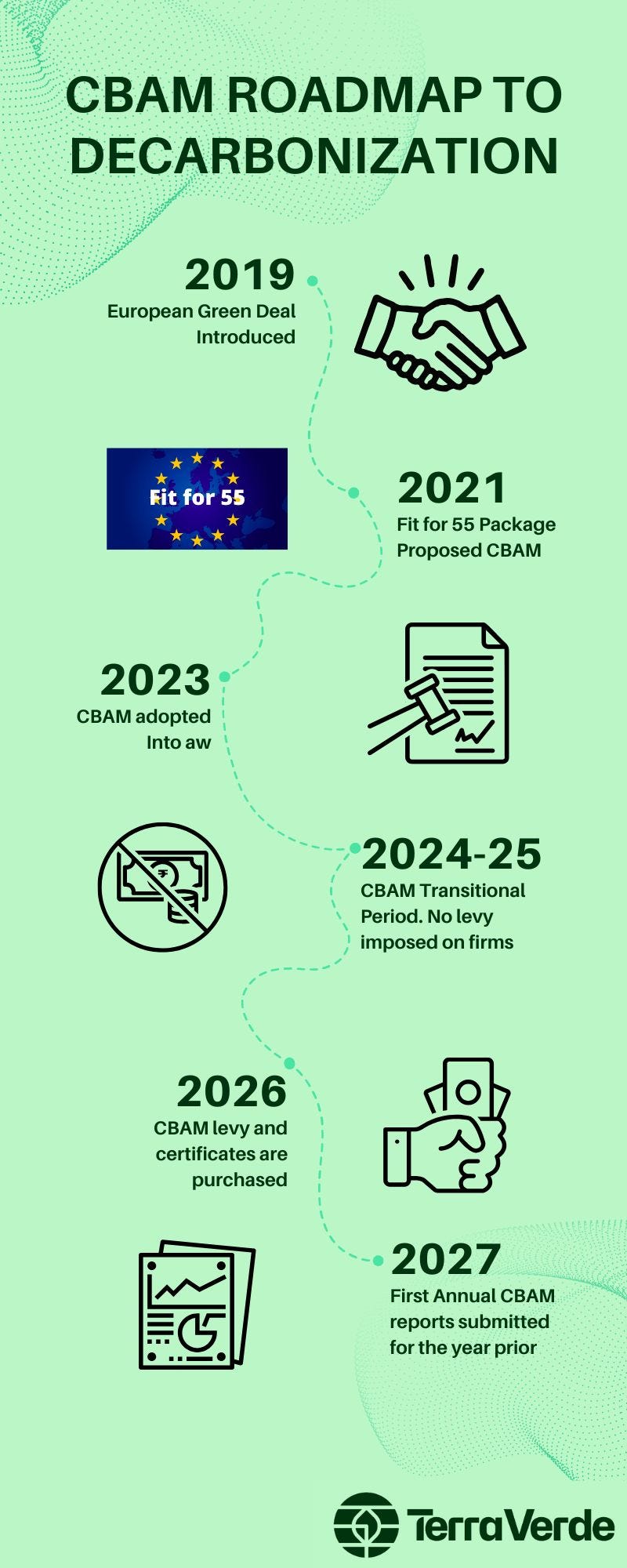
Key Insight for Exporters: Compliance might seem complex, but exporters who invest in accurate reporting and emissions reduction now could reduce CBAM costs significantly. With the right finance strategy, such as sustainability-linked loans, exporters can manage compliance and improve margins.
2. How Does CBAM Work?
Step-by-Step Breakdown for Exporters
Step 1: Track Embedded Emissions
What Exporters Do:
• Exporters must calculate and document the embedded emissions in their products.
• Use one of two methods:
1. Actual Emissions: Verified emissions data from the production process which is the most preferred option.
2. Default Values: EU-provided average emissions for the exporting country or sector which could dramatically decrease your competitiveness.
Key Insight: Providing verified actual emissions can reduce CBAM-related costs for your EU customers.
Step 2: Provide Accurate Data to EU Importers (CBAM Declarants)
What Exporters Do:
• Share verified emissions data with your EU customer (the CBAM declarant).
• Ensure data is compliant with EU requirements and verified by accredited verifiers.
Opportunity for Exporters: Transparency and compliance make your products more attractive to EU buyers, helping you maintain market share.
Step 3: EU Importer Responsibilities
What Happens Next (Importers’ Role):
• EU importers (CBAM declarants) use the emissions data provided by exporters to:
1. Calculate total embedded emissions.
2. Purchase CBAM certificates corresponding to the product’s carbon footprint.
3. Submit CBAM declarations and certificates to EU authorities annually.
What This Means for Exporters: Inaccurate or incomplete data could result in higher CBAM costs for your EU customers, making your products less competitive.
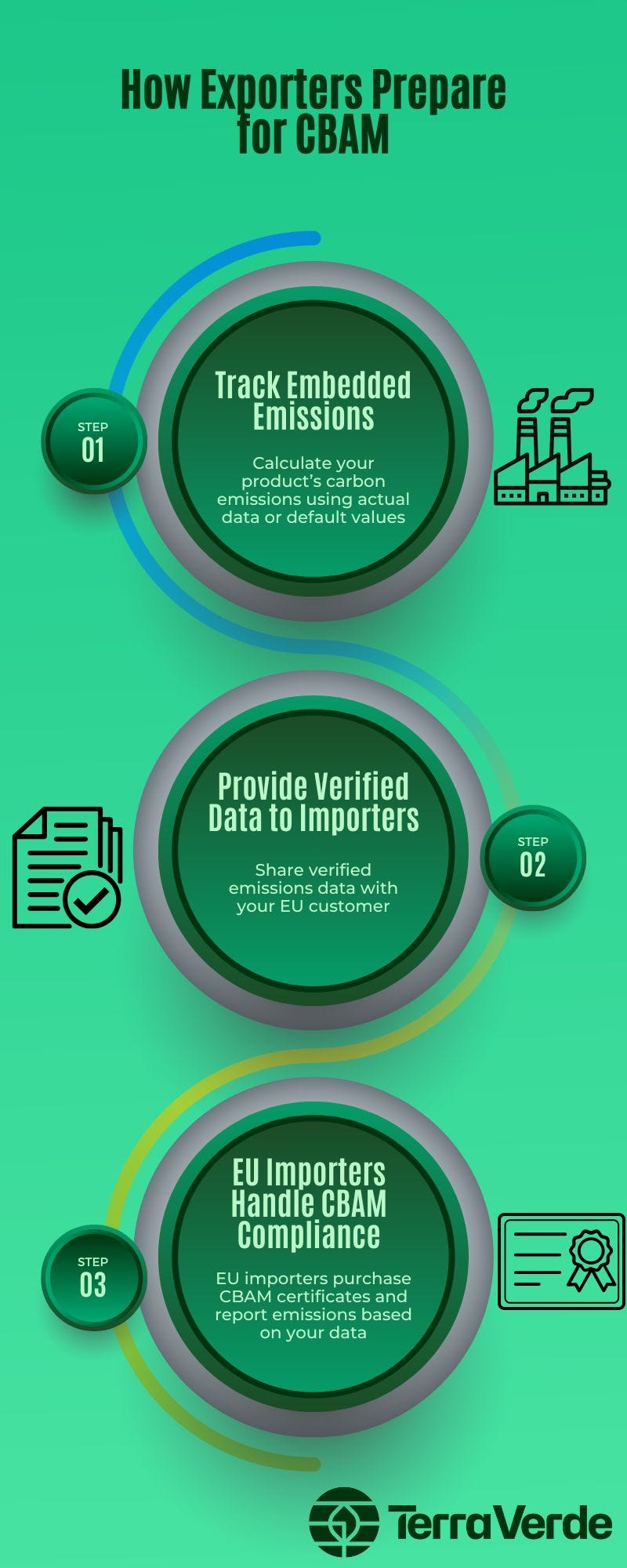
Why This Matters for Exporters: Exporters don’t directly interact with CBAM certificates or surrender requirements, but their emissions data quality impacts their EU customers. Competitive exporters will adopt strategies to streamline data collection and verification to retain their market position.
Conclusion: CBAM isn’t just a challenge for exporters—it’s an opportunity to future-proof your business, gain a competitive edge, and contribute to global decarbonization efforts. By tracking emissions, sharing verified data, and aligning with EU importers, exporters can turn compliance into an advantage. With the right strategies, you can not only meet CBAM requirements but thrive in a rapidly evolving global trade environment.
Stay ahead of CBAM and other climate finance regulations—subscribe to Terra Verde Insights for expert advice and actionable strategies.
Need help preparing for CBAM? Terra Verde specializes in guiding exporters through the complexities of carbon compliance. Reach out to learn how we can help your business succeed.
In our next post, we’ll explore the specific industries most impacted by CBAM and share actionable steps to prepare. Don’t miss it—subscribe today!